

Active Listening: How to Listen Without Lecturing to Young Children and Teens

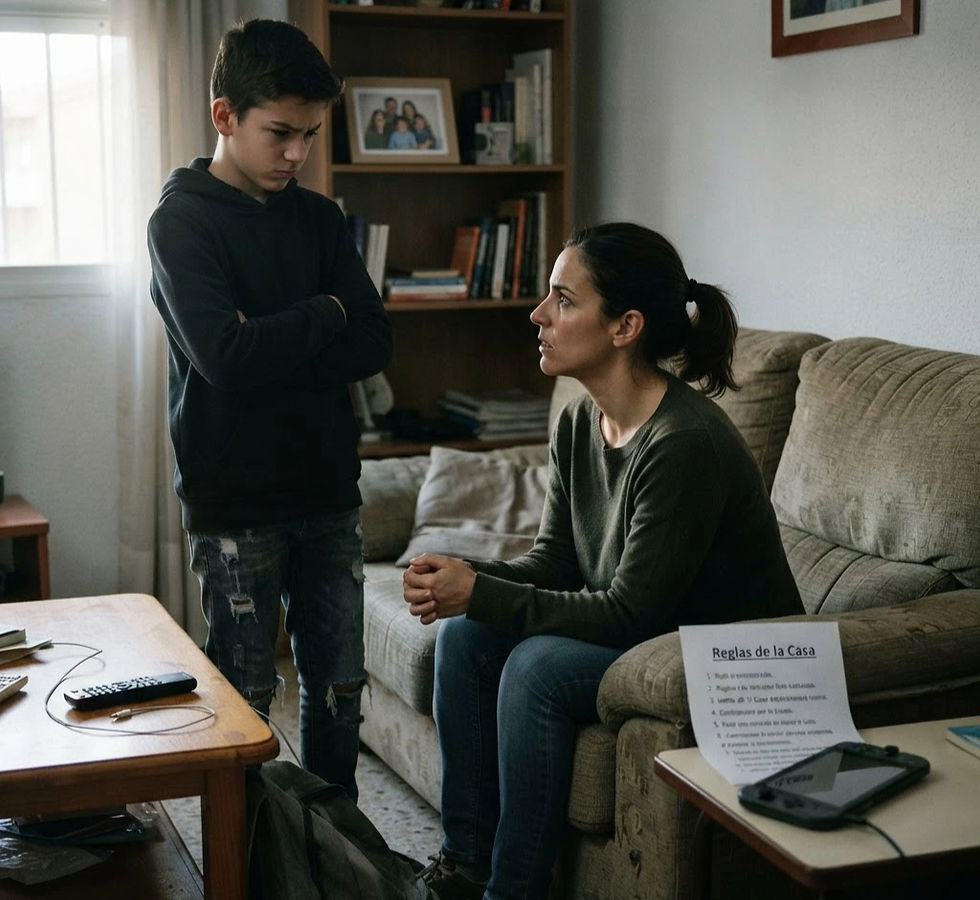
Has your 5-year-old ever started telling you that a classmate wouldn't let him play while you kept looking at your phone, even though the Centers for Disease Control and Prevention (2026a) recommend stopping what you are doing and giving your child your full attention? Doing so lets your child know that you are interested in what they have to say (Centers for Disease Control and Prevention, 2026a). Something similar happens with teens: your 15-year-old daughter tells you she argued with a friend and, before she finishes, you are already lecturing her about bad friendships, even though the American Academy of Pediatrics (2015) recommends holding off on advice until you know all the details and first asking whether your daughter wants to hear your opinion.
Learning to listen without lecturing is worth it, because when children know that their parents will listen to them and support them, they are more likely to talk with them about their hopes and problems as they grow older (Centers for Disease Control and Prevention, 2026a). This becomes especially important in adolescence, since most of what parents know about their teenagers' lives is what the teens themselves choose to tell them (Stattin & Kerr, 2000). According to Tilton-Weaver et al. (2010), whether teens open up depends partly on how their parents react: when parents react badly to what they are told, teens feel more controlled and less close to them, and over time they share less and keep more secrets.
What Active Listening Is (and What It Isn't)
Active listening means giving your child your full attention: stopping what you are doing, making eye contact, and getting down on their level (Centers for Disease Control and Prevention, 2026a). It also means repeating in your own words what your child told you and naming what you think they are feeling, which shows them that you are listening (Centers for Disease Control and Prevention, 2026a). The idea is the same with teens, and the United Nations Children's Fund (n.d.) suggests nodding while they talk and asking open-ended questions, that is, questions that can't be answered with a simple "yes" or "no," to better understand how they feel. According to the American Academy of Pediatrics (2015), it also helps not to interrupt and to watch your tone of voice, because asking with interest is not the same as questioning them as if you were accusing them.
Really listening is not staying quiet while you wait for your turn to correct your child, or answering with phrases like "don't get so upset" or "don't worry," because telling a child to stop feeling a certain way does not show that you are trying to understand how they feel (Centers for Disease Control and Prevention, 2026b). It doesn't mean agreeing with everything they say, either: you can listen without judging and show empathy, even when you see things differently (United Nations Children's Fund, n.d.). Listening this way makes a difference, because in a study with adults, Weger et al. (2014) found that people who talked with someone who restated what they said in other words felt more understood than those who received advice or only brief responses showing they were being heard.

How to Listen to Young Children
With young children, listening starts with noticing what catches their attention: when your child looks at or points to something, makes a sound, or makes a special face, they are inviting you to share that moment with them (Center on the Developing Child at Harvard University, 2017). You can respond with a smile, a hug, or a few gentle words, hand them what they are pointing at, or name what they are seeing, doing, or feeling, because naming things helps children understand the world around them (Center on the Developing Child at Harvard University, 2017). According to the Center on the Developing Child at Harvard University (2017), this back-and-forth of looks, gestures, and words builds a strong foundation in a child's brain for all future learning, and it also strengthens the bond between you.
After you respond, give your child time to answer, because children need that time to develop their own ideas, and waiting also helps them build confidence (Center on the Developing Child at Harvard University, 2017). In fact, with little ones, having a conversation is more useful than talking at them: in a study of children ages 4 to 6, what was most closely linked to how a language-related part of the brain worked was not how many words they heard from adults, but how often they took turns talking with them (Romeo et al., 2018). According to Romeo et al. (2018), that difference in the brain helped explain why the children who had more conversations with adults had an easier time using words.
Listening to a young child also means helping them put a name to what they feel, with phrases like "It looks like you're sad because your friend took your favorite toy" (Centers for Disease Control and Prevention, 2026b). If you get the emotion wrong, that's okay, because children may correct their parents when their feelings are described incorrectly, and you can simply try again (Centers for Disease Control and Prevention, 2026b). While your child is upset, you can also sit with them, stay close, or hold them, and taking the time to listen instead of rushing to solve the problem can keep the situation from escalating (Centers for Disease Control and Prevention, 2026b). In a program for mothers and fathers of 4- and 5-year-olds, Havighurst et al. (2010) found that when parents learned to talk with their children about what they were feeling and why, the children understood their own emotions better, and both parents and teachers noticed fewer behavior problems.
How to Listen to Teens
Adolescence is a time of big changes: the brain finishes developing and maturing in the mid-to-late 20s, and the part that helps with planning, prioritizing, and making good decisions is one of the last to mature (National Institute of Mental Health, 2023). In addition, changes in the parts of the brain involved in social life can make friends more important to teens and sometimes lead them to take more risks, because what they expect to gain with their group can seem to outweigh the possible consequences (National Institute of Mental Health, 2023). According to the National Institute of Mental Health (2023), teens may also respond to stress differently than adults, but their brains have an amazing ability to adapt, and most teens go on to become healthy adults.
With teens, pressure can backfire: when a teen feels that their parents are pressuring and controlling them, they feel more like doing the opposite, and that defiance is linked to more behavior and emotional problems (Van Petegem et al., 2015). Kerr and Stattin (2000) found something similar in 14-year-olds: feeling watched and controlled by their parents was not linked to better outcomes. In contrast, teens who spontaneously shared information about their activities with their parents tended to have better outcomes (Kerr & Stattin, 2000). This suggests that trust and open communication may matter more than constant supervision (Kerr & Stattin, 2000). In line with Tilton-Weaver et al. (2010), when parents react well to what their children tell them, the children feel closer to them and, over time, share more with them.
In practice, the American Academy of Pediatrics (2015) recommends asking specific questions about things you know your child is concerned about, such as a particular class, instead of the usual "How was school?" It also suggests making the most of moments like car rides, because there are few distractions and the conversation feels less tense (American Academy of Pediatrics, 2015). Watch your reactions, too, since a look of surprise or disgust, even without words, creates barriers between you (American Academy of Pediatrics, 2015). And if your child stays quiet, according to the American Academy of Pediatrics (2015), don't give up, because their silence doesn't mean they aren't listening.
It also helps to show an interest in what matters to your child, because that shows them you care (United Nations Children's Fund, n.d.). In addition, recognizing what they do well in the moment, with specific praise, can build their confidence and self-esteem (United Nations Children's Fund, n.d.). If they don't want to talk, it's better not to force the conversation and to let them know you are there for them whenever they are ready (United Nations Children's Fund, n.d.). And when they finally tell you something, the United Nations Children's Fund (n.d.) suggests acknowledging what they feel, for example, by telling them it's understandable that they're angry and that you would feel the same way.
A Quick Guide for Home
Situation | Instead of… | Try… |
Your 4-year-old son cries because his ice cream fell | "Don't cry, it's not a big deal." | "It looks like you're sad because your ice cream fell," and stay by his side. |
Your 2-year-old daughter points at a dog in the park | Keep looking at your phone. | Look at what she's pointing at, say "Yes, it's a dog!" and wait for her to respond. |
Your 8-year-old son comes home tired from school | Ask about homework right away. | Give him some time to rest and talk later in a quiet place. |
Your 15-year-old daughter argued with a friend | "I told you that friendship wasn't good for you." | Listen to her until she finishes and ask if she wants your opinion before giving it. |
Your 13-year-old son answers "fine" to everything | "Why don't you ever tell me anything?" | Ask about something specific, like a class he's worried about, during a car ride. |
Your 16-year-old son doesn't want to talk | Keep insisting until he talks. | Tell him you'll be there whenever he wants to talk, without forcing the conversation. |
When to Seek Professional Help
It's normal for children to go through times of sadness, anxiety, irritability, or aggression, and most of the time these are just stages of development (National Institute of Mental Health, 2024). Even so, it's a good idea to seek advice if these changes last a few weeks or longer, cause a lot of distress, or make life harder at school, at home, or with friends (National Institute of Mental Health, 2024). If your child's behavior is dangerous or if they talk about wanting to hurt themselves or someone else, get help right away (National Institute of Mental Health, 2024). According to the National Institute of Mental Health (2024), a good first step is to talk with your child's teachers and pediatrician, who can refer your child to a mental health professional experienced in evaluating children.
In adolescence, it pays to be even more attentive, because brain changes, combined with physical, emotional, and social changes, can make teens more likely to have mental health problems, such as anxiety or depression (National Institute of Mental Health, 2023). It's also a good idea to ask your child's pediatrician for guidance if communication with your child has become an ongoing problem, since the pediatrician may refer you to a family counselor who can help you work out the difficulties (American Academy of Pediatrics, 2025). And if your teen doesn't want to talk to you about what's going on, according to the American Academy of Pediatrics (2015), it helps to identify other trusted adults they can talk to.
References
American Academy of Pediatrics. (2015a, 21 de noviembre). Cómo comunicarse con su adolescente. HealthyChildren.org. https://www.healthychildren.org/Spanish/family-life/family-dynamics/communication-discipline/Paginas/How-to-Communicate-with-a-Teenager.aspx
American Academy of Pediatrics. (2015b, 21 de noviembre). Lo que hay y no hay que hacer en la comunicación. HealthyChildren.org. https://www.healthychildren.org/Spanish/family-life/family-dynamics/communication-discipline/Paginas/Communication-Dos-and-Donts.aspx
Center on the Developing Child at Harvard University. (2017, 27 de septiembre). 5 pasos para el desarrollo mental: Saque y volea. https://developingchild.harvard.edu/es/resources/inbriefs/5-pasos-para-el-desarrollo-mental-saque-y-volea/
Centros para el Control y la Prevención de Enfermedades. (2016a, 29 de noviembre). Cómo comunicarse con su hijo. https://www.cdc.gov/parents/spanish/essentials/communication/index.html
Centros para el Control y la Prevención de Enfermedades. (2016b, 29 de noviembre). Escuchar activamente. https://www.cdc.gov/parents/spanish/essentials/communication/activelistening.html
Fondo de las Naciones Unidas para la Infancia. (s.f.). 11 consejos para tener una buena comunicación con los adolescentes. https://www.unicef.org/parenting/es/cuidad-infantil/11-consejos-tener-buena-comunicacion-con-adolescentes
Havighurst, S. S., Wilson, K. R., Harley, A. E., Prior, M. R., & Kehoe, C. (2010). Tuning in to Kids: Improving emotion socialization practices in parents of preschool children—findings from a community trial. Journal of Child Psychology and Psychiatry, 51(12), 1342–1350. https://doi.org/10.1111/j.1469-7610.2010.02303.x
Instituto Nacional de la Salud Mental. (2023). El cerebro de los adolescentes: 7 cosas que usted debe saber (Publicación de NIH Núm. 23-MH-8078S). Departamento de Salud y Servicios Humanos, Institutos Nacionales de la Salud. https://www.nimh.nih.gov/health/publications/espanol/el-cerebro-de-los-adolescentes-7-cosas
Instituto Nacional de la Salud Mental. (2024). Los niños y la salud mental: ¿Es solo una etapa? (Publicación de NIH Núm. 24-MH-8085S). Departamento de Salud y Servicios Humanos, Institutos Nacionales de la Salud. https://www.nimh.nih.gov/health/publications/espanol/los-ninos-y-la-salud-mental
Kerr, M., & Stattin, H. (2000). What parents know, how they know it, and several forms of adolescent adjustment: Further support for a reinterpretation of monitoring. Developmental Psychology, 36(3), 366–380. https://doi.org/10.1037/0012-1649.36.3.366
Romeo, R. R., Leonard, J. A., Robinson, S. T., West, M. R., Mackey, A. P., Rowe, M. L., & Gabrieli, J. D. E. (2018). Beyond the 30-million-word gap: Children's conversational exposure is associated with language-related brain function. Psychological Science, 29(5), 700–710. https://doi.org/10.1177/0956797617742725
Stattin, H., & Kerr, M. (2000). Parental monitoring: A reinterpretation. Child Development, 71(4), 1072–1085. https://doi.org/10.1111/1467-8624.00210
Tilton-Weaver, L., Kerr, M., Pakalniskeine, V., Tokic, A., Salihovic, S., & Stattin, H. (2010). Open up or close down: How do parental reactions affect youth information management? Journal of Adolescence, 33(2), 333–346. https://doi.org/10.1016/j.adolescence.2009.07.011
Van Petegem, S., Soenens, B., Vansteenkiste, M., & Beyers, W. (2015). Rebels with a cause? Adolescent defiance from the perspective of reactance theory and self-determination theory. Child Development, 86(3), 903–918. https://doi.org/10.1111/cdev.12355
Weger, H., Jr., Castle Bell, G., Minei, E. M., & Robinson, M. C. (2014). The relative effectiveness of active listening in initial interactions. International Journal of Listening, 28(1), 13–31. https://doi.org/10.1080/10904018.2013.813234


Comments