

Limits, Rules, and Punishment: How They Differ and why Punishment Teaches so Little

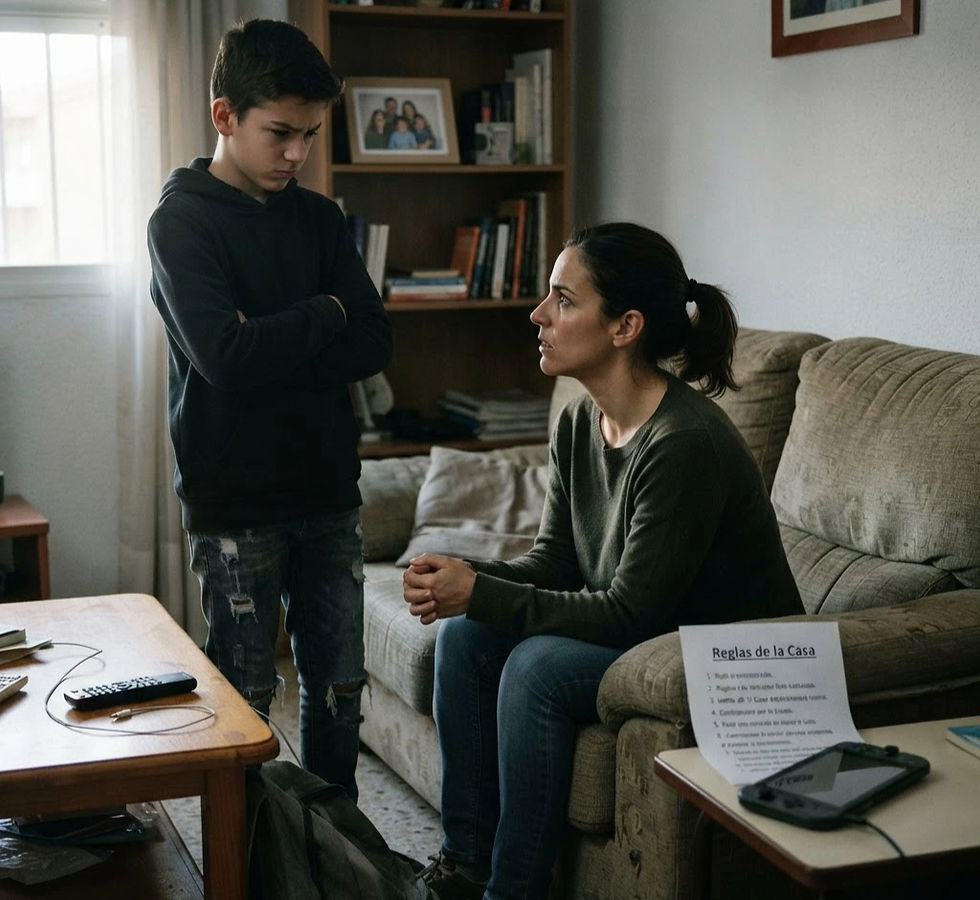
Imagine your 5-year-old son hits his sister to grab a toy from her, and you feel the urge to respond with a swat or a yell. That reaction is more common than it seems: An estimated 1.2 billion children and adolescents are subjected to corporal punishment at home every year (World Health Organization, 2026). However, the evidence gathered by the World Health Organization (2026) shows that this kind of punishment harms physical and mental health, increases behavior problems over time, and has no positive outcomes.
Rules, Limits, and Punishment: Three Words, Three Different Meanings
A rule is a clear, stable guideline that is known before a situation arises, and the American Academy of Pediatrics (2018) recommends that rules be clear, consistent, and possible for children to follow. According to Gottman et al. (1996), a limit is the way an adult upholds that rule in the moment—for example, by stopping a behavior that hurts someone—without dismissing the child’s emotion, as adults do when they help children name what they feel while setting limits on their behavior.
Punishment, by contrast, seeks to correct through pain or humiliation: Colombian law defines physical punishment as an action that uses physical force to cause pain, and cruel, humiliating, or degrading treatment as actions that harm a child’s dignity, such as belittling, denigrating, or cruelly threatening them (Ley 2089, 2021). Not every consequence is a punishment: The American Academy of Pediatrics (2018) recommends calmly explaining the consequences of misbehavior and advises against yelling at or shaming children.
Concept | What It Is | Example |
Rule | A clear, consistent guideline that is known in advance (American Academy of Pediatrics, 2018). | “At the table, we eat sitting down.” |
Limit | The action through which an adult upholds the rule in the moment, without dismissing the emotion (Gottman et al., 1996). | “You can be angry, but I won’t let you hit her.” |
Punishment | An action that seeks to correct by causing pain or harming dignity; in its physical or humiliating forms, it is prohibited in Colombia (Ley 2089, 2021). | A swat, a humiliating yell, or ridicule in front of others. |
Myths and Realities About Punishment
Myth 1: “A Well-Timed Swat Prevents Bigger Problems”
Reality: A review of 69 longitudinal studies found that physical punishment consistently predicts increases in behavior problems over time and is not associated with positive outcomes (Heilmann et al., 2021). In a meta-analysis, spanking was associated with greater risk on 13 of 17 detrimental outcomes, and its effects did not differ substantially from those of physical abuse (Gershoff & Grogan-Kaylor, 2016).
Myth 2: “If I Don’t Punish Them, They Won’t Learn”
Reality: The American Academy of Pediatrics concludes that aversive strategies, such as corporal punishment, yelling, or shaming, have little effect in the short term and are ineffective in the long term (Sege et al., 2018). In contrast, according to the American Academy of Pediatrics (2018), paying attention to children is the most effective way to discipline them.
Myth 3: “If There’s No Hitting, There’s No Harm”
Reality: In a study of 976 families, mothers’ and fathers’ harsh verbal discipline at age 13, which included yelling at, cursing at, or insulting their child, predicted increases in conduct problems and depressive symptoms between ages 13 and 14 (Wang & Kenny, 2014). Moreover, Wang and Kenny (2014) found that parental warmth did not buffer these associations, which suggests that affection at other times does not offset the effects of yelling and insults.
Myth 4: “Setting Limits Means Being Authoritarian”
Reality: A meta-analysis of 1,435 studies found that behavioral control, such as monitoring children and setting rules, and an authoritative parenting style, which combines warmth and demandingness, are modestly associated with fewer behavior problems, whereas harsh control and psychological control, such as inducing guilt or withdrawing affection, showed the strongest associations with more problems (Pinquart, 2017).
Why Punishment Teaches So Little
Punishment may stop a behavior in the moment, but stopping it is not the same as learning: In a classic meta-analysis, corporal punishment was associated with greater immediate compliance and, at the same time, with more aggression and less moral internalization, that is, a reduced ability to make rules one’s own (Gershoff, 2002). A later review concluded that the evidence meets several criteria for causality and that these effects recur across cultural and family contexts (Gershoff et al., 2018).
From a neuroscience perspective, in a study of 147 children with an average age of 11.6 years, those who were spanked showed greater activation of the prefrontal cortex, the front region of the brain, in response to fearful faces, a pattern similar to that seen in more severe forms of maltreatment (Cuartas et al., 2021). In young adults who had experienced years of harsh corporal punishment, researchers found reduced prefrontal gray matter volume, although the authors caution that these differences may have been present beforehand (Tomoda et al., 2009). These findings do not mean that a single episode damages the brain, but they are consistent with the World Health Organization (2026), which links corporal punishment to changes in brain structure and function.
What the Law Says in Colombia
Since May 14, 2021, Colombia’s Law 2089 (Ley 2089) has prohibited physical punishment, cruel, humiliating, or degrading treatment, and any form of violence as a method of correcting children and adolescents, a ban that applies to mothers and fathers as well as to anyone else responsible for their care, in every setting, such as the home, schools, and public or online spaces.
The law did not take away families’ authority to correct their children: It amended Article 262 of the Civil Code, which now recognizes the right to supervise children’s behavior, correct them, and sanction them but prohibits doing so through physical punishment, humiliating treatment, or any form of violence (Ley 2089, 2021). It also added the right to good treatment to the Children and Adolescents Code (Código de la Infancia y la Adolescencia) and ordered the national government, through the Colombian Family Welfare Institute (ICBF) and several ministries, to create a pedagogical and prevention strategy (Ley 2089, 2021).
In 2022, Colombia’s Constitutional Court struck down two passages of the law: the one that described physical punishment as an act of upbringing, guidance, or education, because it legitimized it, and the one that kept physical punishment from being grounds for losing parental authority (patria potestad) or custody unless it was repeated and affected the child’s health, because it tolerated certain levels of maltreatment (Corte Constitucional de Colombia, 2022).
Strategies to Use at Home
No strategy works the same way for every child, and the American Academy of Pediatrics tailors its discipline guidance to each stage of development (Sege et al., 2018).
Few, clear rules, announced in advance: Before a visit, calmly remind your child of the rule, for example, “At Grandma’s house, we walk; we don’t run,” as the American Academy of Pediatrics (2018) advises when it recommends clear rules and planning ahead for moments when a child may have trouble behaving.
A firm limit that doesn’t dismiss the emotion: If a behavior hurts someone, stop it and name the emotion: “You’re really angry; I won’t let you hit her, but you can tell me what upset you,” a combination of emotional acknowledgment and limits that Gottman et al. (1996) described in adults who support their children’s emotions.
Related consequences, not punishments: Calmly explain what will happen if the behavior happens again, such as “If you throw the blocks, we’ll put them away for today,” and follow through without yelling or hurtful words (American Academy of Pediatrics, 2018).
Attention to what your child does well: Name their efforts, such as “You waited your turn even though you wanted to play right away,” because, as the American Academy of Pediatrics (2018) points out, children also need to know when they do something good.
Pause and repair: If you feel you are about to yell or hit, pause before stepping in, and if you have already lost control, repair with phrases such as “I yelled at you, and that wasn’t okay; I’m sorry,” because healthy development is associated with mismatches that get repaired, not with perfect interactions (Tronick, 1989).
When to Seek Professional Help
It is worth seeking advice if a child’s aggression, irritability, or sadness lasts a few weeks or more, causes distress, or interferes with school, family, or social life, and help should be sought immediately if the child’s behavior is dangerous or if the child talks about wanting to hurt themselves or someone else (National Institute of Mental Health, 2024). According to the National Institute of Mental Health (2024), a good starting point is to talk with the people who see the child often, such as their teachers, and with the pediatrician, who can refer the child to a mental health professional experienced in evaluating children.
It is also reasonable to seek guidance if you feel you can only get your child to obey by yelling or hitting, since support for mothers, fathers, and caregivers is one of the measures the World Health Organization (2026) recommends to prevent corporal punishment. If a child is at risk in Colombia, you can contact ICBF’s Line 141, a free national hotline for protection, emergencies, and guidance that is available 24 hours a day.
Correcting Without Hurting
Setting rules and limits is not the opposite of affection, and correcting without hitting or humiliation is what Colombian law now expects of all families, which keep the right to guide and correct their children (Ley 2089, 2021; Pinquart, 2017). Every time an adult replaces punishment with a conversation, the child gains something more useful than fear: the chance to understand the rule, in line with the recommendation to talk with children rather than simply imposing consequences (American Academy of Pediatrics, 2018). If you’d like, tell us in the comments which phrase about discipline you used to hear at home as a child, and read our article on how we talk about emotions at home.
References
American Academy of Pediatrics. (2018, 5 de noviembre). ¿Cuál es la mejor forma de disciplinar a mi hijo? HealthyChildren.org. https://www.healthychildren.org/Spanish/family-life/family-dynamics/communication-discipline/Paginas/Disciplining-Your-Child.aspx
Corte Constitucional de Colombia. (2022, 24 de febrero). Sentencia C-066 de 2022 (A. Linares Cantillo, M. P.). https://www.corteconstitucional.gov.co/relatoria/2022/C-066-22.htm
Cuartas, J., Weissman, D. G., Sheridan, M. A., Lengua, L., & McLaughlin, K. A. (2021). Corporal punishment and elevated neural response to threat in children. Child Development, 92(3), 821–832. https://doi.org/10.1111/cdev.13565
Gershoff, E. T. (2002). Corporal punishment by parents and associated child behaviors and experiences: A meta-analytic and theoretical review. Psychological Bulletin, 128(4), 539–579. https://doi.org/10.1037/0033-2909.128.4.539
Gershoff, E. T., Goodman, G. S., Miller-Perrin, C. L., Holden, G. W., Jackson, Y., & Kazdin, A. E. (2018). The strength of the causal evidence against physical punishment of children and its implications for parents, psychologists, and policymakers. American Psychologist, 73(5), 626–638. https://doi.org/10.1037/amp0000327
Gershoff, E. T., & Grogan-Kaylor, A. (2016). Spanking and child outcomes: Old controversies and new meta-analyses. Journal of Family Psychology, 30(4), 453–469. https://doi.org/10.1037/fam0000191
Gottman, J. M., Katz, L. F., & Hooven, C. (1996). Parental meta-emotion philosophy and the emotional life of families: Theoretical models and preliminary data. Journal of Family Psychology, 10(3), 243–268. https://doi.org/10.1037/0893-3200.10.3.243
Heilmann, A., Mehay, A., Watt, R. G., Kelly, Y., Durrant, J. E., van Turnhout, J., & Gershoff, E. T. (2021). Physical punishment and child outcomes: A narrative review of prospective studies. The Lancet, 398(10297), 355–364. https://doi.org/10.1016/S0140-6736(21)00582-1
Instituto Colombiano de Bienestar Familiar. (2020, 23 de septiembre). Nada justifica la violencia contra niños, niñas y adolescentes. https://www.icbf.gov.co/node/111754
Instituto Nacional de la Salud Mental. (2024). Los niños y la salud mental: ¿Es solo una etapa? (Publicación de NIH Núm. 24-MH-8085S). Departamento de Salud y Servicios Humanos, Institutos Nacionales de la Salud. https://www.nimh.nih.gov/health/publications/espanol/los-ninos-y-la-salud-mental
Ley 2089 de 2021. Por medio de la cual se prohíbe el uso del castigo físico, los tratos crueles, humillantes o degradantes y cualquier tipo de violencia como método de corrección contra niñas, niños y adolescentes y se dictan otras disposiciones. 14 de mayo de 2021. D. O. No. 51.674. https://normograma.mintic.gov.co/mintic/compilacion/docs/ley_2089_2021.htm
Organización Mundial de la Salud. (2026, 11 de mayo). Castigo corporal de los niños y salud. https://www.who.int/es/news-room/fact-sheets/detail/corporal-punishment-and-health
Pinquart, M. (2017). Associations of parenting dimensions and styles with externalizing problems of children and adolescents: An updated meta-analysis. Developmental Psychology, 53(5), 873–932. https://doi.org/10.1037/dev0000295
Sege, R. D., Siegel, B. S., Council on Child Abuse and Neglect, & Committee on Psychosocial Aspects of Child and Family Health. (2018). Effective discipline to raise healthy children. Pediatrics, 142(6), Artículo e20183112. https://doi.org/10.1542/peds.2018-3112
Tomoda, A., Suzuki, H., Rabi, K., Sheu, Y.-S., Polcari, A., & Teicher, M. H. (2009). Reduced prefrontal cortical gray matter volume in young adults exposed to harsh corporal punishment. NeuroImage, 47(Supl. 2), T66–T71. https://doi.org/10.1016/j.neuroimage.2009.03.005
Tronick, E. Z. (1989). Emotions and emotional communication in infants. American Psychologist, 44(2), 112–119. https://doi.org/10.1037/0003-066X.44.2.112
Wang, M.-T., & Kenny, S. (2014). Longitudinal links between fathers' and mothers' harsh verbal discipline and adolescents' conduct problems and depressive symptoms. Child Development, 85(3), 908–923. https://doi.org/10.1111/cdev.12143


Comments